
Pee Wee ProgramSuggested Curriculum,
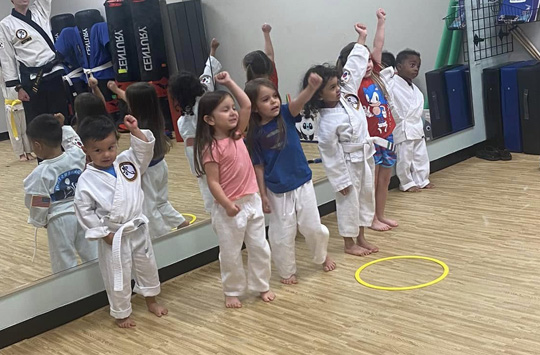
The APTSDF Pee Wee Program is a suggested curriculum, teaching method, and belt system to be used by member schools for Pre-Gup students (usually 4-6 year olds).
Teaching pee-wees can be one of the most yet rewarding groups of students to teach. They can also be a challenging and, for some, frightening group to teach. You may ask, “Why bother teaching pee wees at all? “.
Having a strong Pee Wee program is very beneficial to a strong school. If done right, many of your Pee Wee students will stay with you for many years and move to your Gup and even black belt programs. Also, you can work to involve the whole family and recruit not only youth, but also adult students.
Pee WeeProgram Manual
The first step to developing a pee wee program is to find the right instructor. This can be yourself or another certified instructor within your school. What are the traits of a good peewee instructor?
1. The ability to identify with young children and their parents. Working with pee wees requires that you develop an understanding of how their minds work. You need to really try to develop your ability to recognize their moods, fears, hopes, tests (meaning them testing you), etc. You also need to have an excellent relationship with their parents. They and their parents need to trust you. The children’s parents need to see you as their partner in raising the child, a person to go to for support. With time and caring you can develop this trait, but some of it needs to be natural to you. Children can tell if you aren’t sincere.
2. Confidence and competence. Even a young child can tell if the person teaching them is confident. This age group more than any other is at the ‘testing’ age, meaning, they test the boundaries with all authority figures. This is true of even the best kids. Most of them want the person teaching them to be in charge, but they will test you. They test you in many ways; talking when they aren’t supposed to, refusing to do what you ask them to, crying, or getting out of control. To handle being tested there are many things you can do, here are some suggestions that will help you keep control of your classes:
-
-
-
a. Establish boundaries, your students must know what you expect from them. Children are much happier when they know what you expect from them. Whenever a child tells you “I don’t want to” I answer, I didn’t ask if you wanted to. This sounds simple but it is very effective. The child understands they don’t have a choice and usually will then do as you ask.
-
-
-
-
-
b. Teach them that respect and courtesy are always necessary, this is at home, at school, everywhere. Good habits last a lifetime. The parents always feel the program is more important when they see their child learning about manners and courtesy.
-
-
-
-
-
c. Always give your best. Remember you get what you expect. If the students know that you expect their best, you will often get it. If you don’t make it clear what you expect, the child will decide what they want to give you. If a child is giving their best effort, mistakes aren’t important, technique will follow in time.
-
-
-
-
-
d. Never leave the class without permission. You can’t teach a good class if you constantly have students running off the floor whenever a mood strikes them. Students must raise their hands whenever they need to leave class. (Note: always see what they need right away, these guys still have small bladders!!)
-
-
-
-
-
e. “No” and “Can’t” are not allowed. These are failure words.
-
-
-
-
-
f. Safety first. Make sure the kids understand that some rules are to keep them safe, not to ruin their fun.
-
-
-
-
-
g. Understand the motivation of the child. Is the child refusing to do what you ask out of fear? Is he/she just excited? Is he/she a behavior problem everywhere? Are there family issues you need to know about?
-
-
Sometimes when a child refuses to do what you ask, it is because they fear new things, or are afraid they can’t do it. Most people would rather play it safe. If they fear they can’t do something they would rather not try to do it, than try and fail.
Overcoming fear is one of the most important lessons you can teach. It is O.K. to fail sometimes, as long as you keep trying. Teach your students that you make mistakes too, and don’t get everything right the first time either. One of our favorite sayings is one I have heard Grandmaster St. James say many times “If you think you can, or if you think you can’t, either way you are right”.
abulary we consider "can't" to be a bad word, they can say, “I haven’t gotten it yet”, but never say, “I can’t”. You have to be firm with the child. Sometimes parents will come to you and say their child is so shy they can’t get them to participate in any activity. If you cuddle a child like this, they often get worse.
I tell the child they are going to take class and give them choices:
-
- They will come out to class on their own.
- They will walk out to class holding my hand and I will help them
- I will have one of my teenage black belts help them
- I will carry them out to class.
Not taking class is not an option; they realize this and make a choice. It may sound a little harsh, but you are helping them overcome their fear. Also remember, never bluff, if you say you will carry them out, do it. Make sure you have discussed this with the parents so they know what to expect. Within weeks the parents are usually coming to you and telling me how much more confident their child is, and how much better they adjust to new situations. This is usually because they learned it was a good thing once they did it, and they are more willing to try things.
Some children are just really excited, and have trouble controlling themselves. You don’t wa
nt to crush the child’s enthusiasm, but you can’t have the whole class disrupted by them either. With this kind of child, you should try to give them something really active to do. One drill we use is the “stop and freeze” drill. They have an activity to do and when I say “stop” they have to freeze in attention.
Sometimes I have them shake all over or run in place, then freeze. They use their energy running around, then learn control by freezing, then you brag on how fast they can get under control. Eventually they enjoy showing control and become great students. You can also brag on their enthusiastic “yes ma'am” or "yes sir" and “ki hap”, so they focus that energy in the right place.
One of the most challenging groups is the true behavior problem; this is the child with no discipline. Usually the child has been spoiled or has some kind of home problem, either a recent divorce, an absent parent, or some other problem. This child really needs you to be a strong authority figure because they for some reason don’t have that at home. Many parents come to our school because they are having discipline problems.
Many times, you may find that the problem is that the parents are afraid to be strong with their children. These parents often beg their child to behave, instead of expecting and demanding it. In this situation you may have to be strong with the child, and counsel the parents. Parents come in for one introductory lesson, and will be amazed that you have their child under control in 15 minutes.
h. Reward good behavior. Don’t continually recognize the child doing things wrong; continually reward the child doing things right. For example, give out stickers that say “future black belt”. Only give out these stickers occasionally, and I don’t let them know when I’m going to. I call it getting caught acting like a black belt.
i. Be the authority figure in your dojang. Talk to the parents and ask them to let you handle all discipline in the classroom, that way you are the authority figure. If mom and dad are constantly jumping in or they run to them when they get in trouble, it makes it much more difficult to keep the class under control. You also improve your retention by becoming someone the parents can come to for assistance if they are having behavior problems at home or school.
j. Conferences. Have one-on-one talks with children that are having a problem.
3. Patience. These little guys sometimes try and try, and just don’t seem to be able to get it right. You have to remember that their coordination and muscle development is not matured yet. Also, you need to understand what kind of learner you have. There are 3 major ways that people learn.
-
-
a. Auditory. An auditory learner is a person who learns primarily by listening. This type of person will understand what you want them to do better if you explain it, talk them through it. You will notice that these people tend to be very social; they also tend to have good ki hap. The auditory person likes the sound of hitting the target.
-
-
-
b. Visual. A visual learner is a person who learns primarily by seeing. This is the person that needs to see you demonstrate a technique. They won’t understand if you just explain it. The visual person tends to watch things closely and be very observant.
-
-
-
c. Kinesthetic. A kinesthetic learner is a person who learns primarily by feeling. This is the person that needs to feel or do something before they really understand it.
-
The kinesthetic learner is often your biggest challenge. The kinesthetic learner tends to be more quite, often artistic, and sometimes have less confidence in their abilities. This may be because many people don’t know how to teach a kinesthetic learner, and lose patience. With a kinesthetic learner you need to use a lot of targets, and actually turn their hand or position their leg the way you want it in order for them to understand. But, be careful not to overdue this with any child.
A mistake often made, is when someone with good intentions stands behind the child and repeatedly moves the child’s hands. This often makes the children feel incapable of doing it themselves. Also, if the child has ADD or ADHD they may feel distressed or crowded and may become upset.
With patience you can learn to identify each kind of learner and you can personalize your teaching style to their type. All of us learn all three ways, but most people have a leaning in one of the three styles. Many pee wees are very kinesthetic and tend to become more auditory or visual, as they get older.
4. Perseverance. Don’t give up on the pee wees or yourself. Pee wees are a challenge. At times you may think you aren’t connecting with the kids, or they don’t want to be there. Everyone has days like that, just remember that it will be worth all your hard work. You had to set goals for yourself to achieve your black belt, set a goal to become a great pee wee instructor. With practice and patience, you can do it.
5. Love the kids and love teaching. Remember you are teaching martial arts because you love the martial arts. (If this isn’t the case you shouldn’t be teaching). To be a great pee wee instructor, you must not only have a passion for the martial arts, but also a passion for teaching. You must really believe that what you are teaching can change the lives of these children. You must really care about the students. The kids will know if you don’t. That doesn’t mean you will be thrilled to be there every day, but always remember your passion for the martial arts.
Curriculum
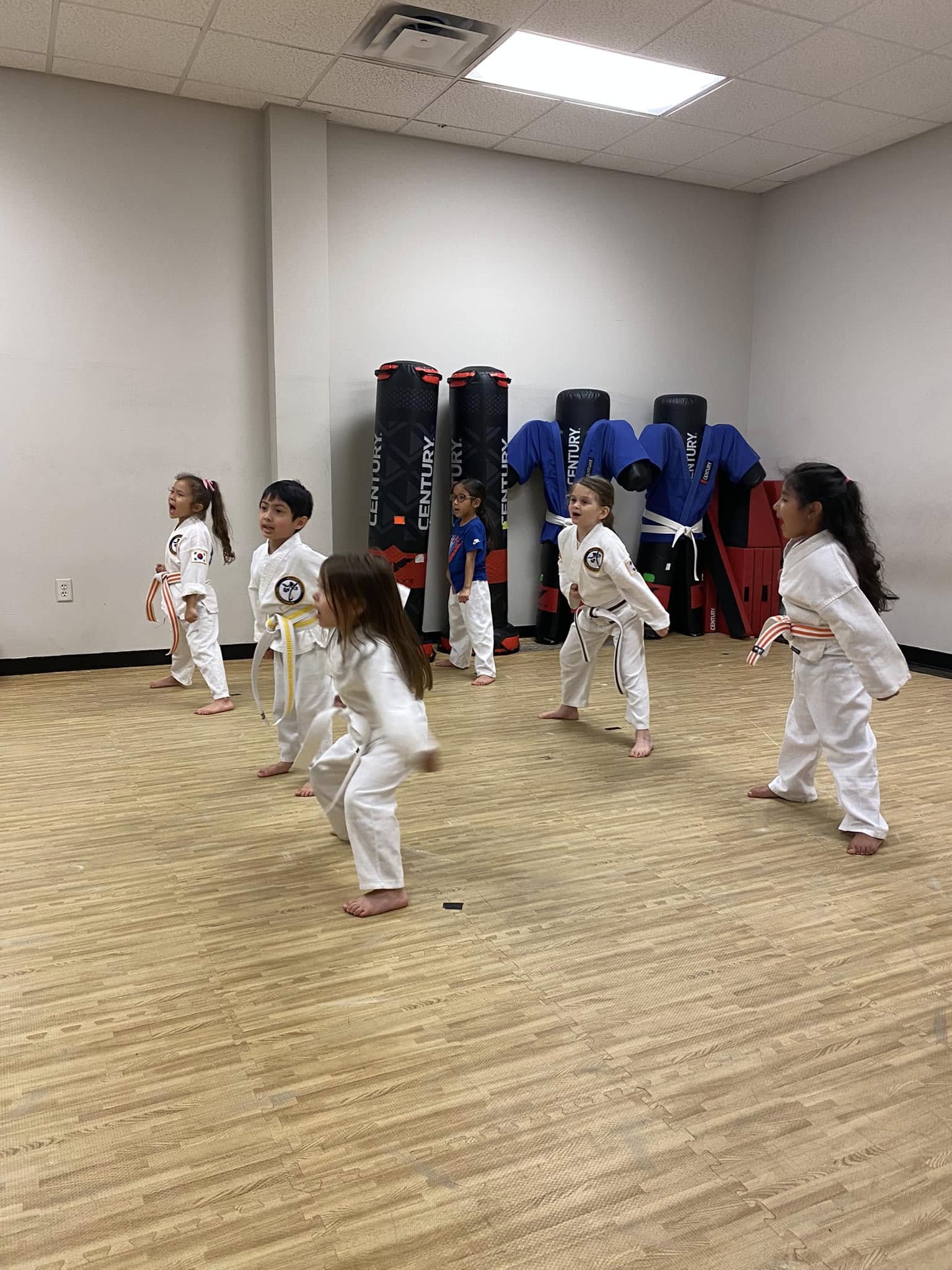
You don't want your pee wee program to become just a play group. You want to teach the students actual martial arts. The secret is to break everything down into smaller pieces. For example, when you teach the first form, you start with just the first four steps, without the punches or blocks. This way the kids just need to think about their feet, they work with their hands on their hips. The next step is to learn the low block and center punch and add them to the foot movements. Then, we add the next section. Pee wee's can learn forms, they just need to learn differently at this age. Sometimes to get the turns etc. you need to remember the three types of learning I discussed earlier (visual, auditory and kinesthetic) show the turn, explain the turn, and have them touch the correct leg to move so they can feel it.
Our curriculum is as follows:
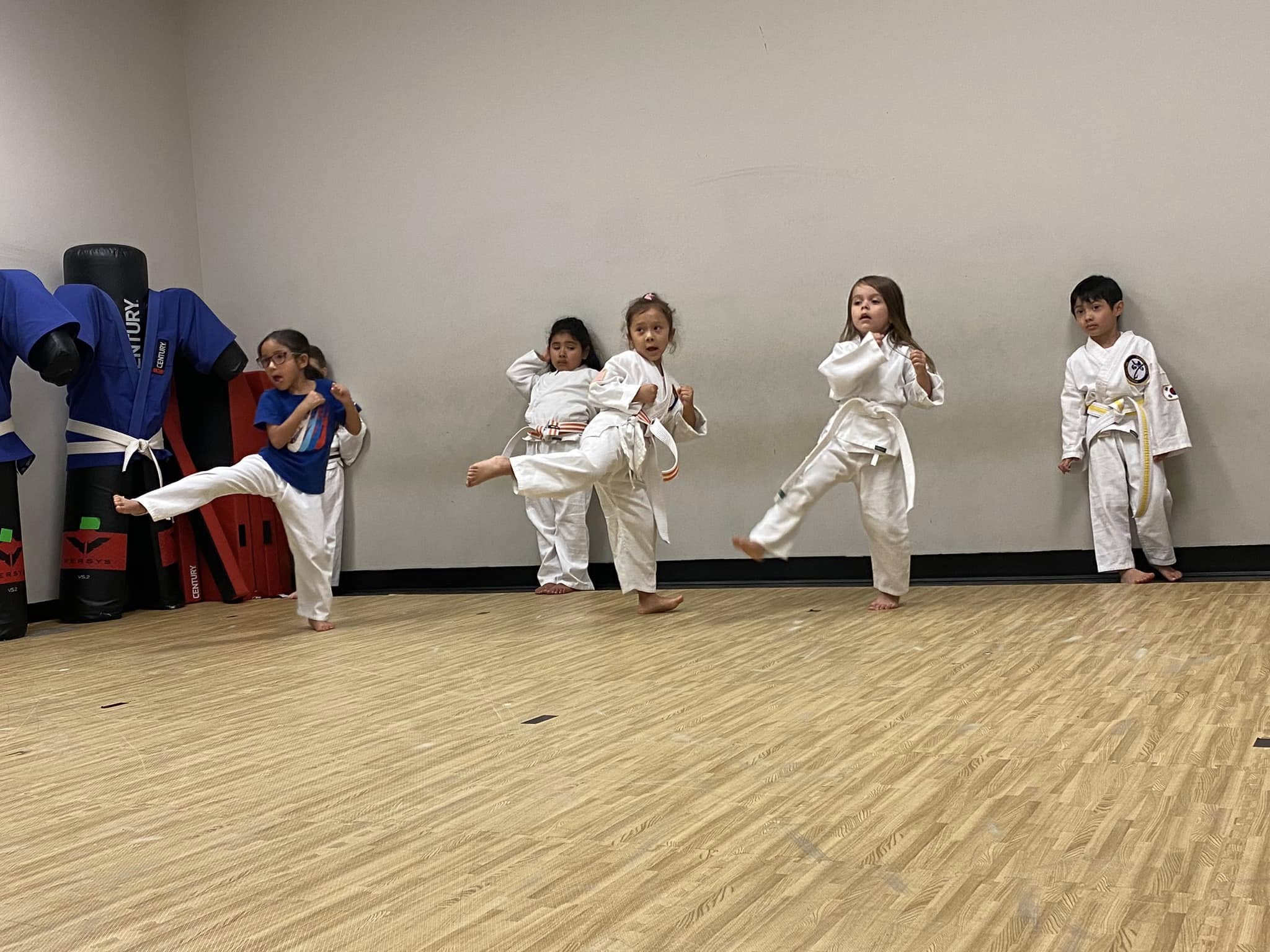
• White belt: Attention, bow, jab, back-fist, knee strike.
• White with orange stripe: Reverse punch, our blocking drill (done in a horse stance, double low blocks, double high blocks, double outside to inside blocks, pulling both hands to chamber, and double palm strikes).
Techniques are done on a 5 count with the students yelling the name of the technique, low block, high block, etc. Ending with the double palm strikes done with a ki hap), front kick, pivot for roundhouse kick, 4 steps of the Gee Cho Hyung Il Bu (no hands, just feet)
• White with green stripe: Palm strike, roundhouse kick, axe kick, first 4 steps of Gee Cho Hyung Il Bu (hands and feet).
• White with Brown stripe: Jab/Reverse punch combination, sidekick, First 8 steps of Gee Cho Hyung Il Bu.
• White with Red stripe: Back fist/Palm strike combination, inside to outside crescent kick, First 12 moves of Gee Cho Hyung Il Bu.
• White with Blue stripe: Defensive hands (stepping back with hands up to protect yourself), Outside to inside crescent kick, All of Gee Cho Hyung Il Bu.
• At the end of this rank, they should be ready to test to 9th Gup yellow belt and move to the next program. If they are not yet ready, work on improving the above and add Jump Front Kicks and spinning crescent kick and add Yellow with an orange stripe, green stripe etc. All students should test to 9th Gup before turning 7 years old. Some may be ready younger if they have been training longer.
Lesson Plans
Once you have your instructor and curriculum, you need lesson plans. Remember that your lesson should include not just techniques, but fun drills. The kids need to have fun. Yes, they need to learn focus, self-discipline, self-control, perseverance etc., but most importantly you want them to learn to love the martial arts. To accomplish this, they need them to hang around.
A sample lesson plan would be: 5 minutes – Line up, bow in
8 minutes – Warm up: jumping jacks led by a student, basic punches and kicks, the blocking drill and fun stretching (normal stretches with added fun things like dancing spiders running out until you are fully stretched etc.)
10 minutes – Curriculum for the day, forms, or one steps etc.
4 minutes – Fun drill (bopper, Kyo Sah Nim says, or maybe an obstacle course
3 minutes – Announcements, merit stripes, and bow out
Make sure to hide repetition by mixing things up. If they seem to be getting bored or distracted try suddenly having them jump up and sit down and jump up and sit down. This will wake them up and get them laughing, then you can get back to the lesson.
Come up with a list of fun drills that work for you, some of ours are:
• Bopper. The students line up and the instructor tries to bop them in the head with a foam blocker target. The student has to high block, if they don’t block in time they have to sit down. The fun part is the instructor tries to distract them, looking at one and bopping the other, etc. It can get very funny. This is a favorite drill with the pee wee group.
• Spinner. The students stand in a circle as the instructor or assistant spins a foam noodle tied to the end of a rope made of belts. The students jump over the noodle as it comes around. This is a favorite drill of the youth students.
• Kyo Sah Nim says. Like Simon says, but Kyo Sah Nim or Sah Bum Nim.
• Gladiator sparring. Students arm themselves with noodles for swords and targets for shields
• Flag sparring. Same as the flag sparring at assoc. events.
You may do other fun drills, and try to come up with more all the time.
Remember to always show your parents the benefits of having their child in your school. Parents can be your best salespeople. The parents of children this age will tell many other parents about anything they think is great for their children.
There is so much to do to start a great pee wee program; this paper just touches the surface.
